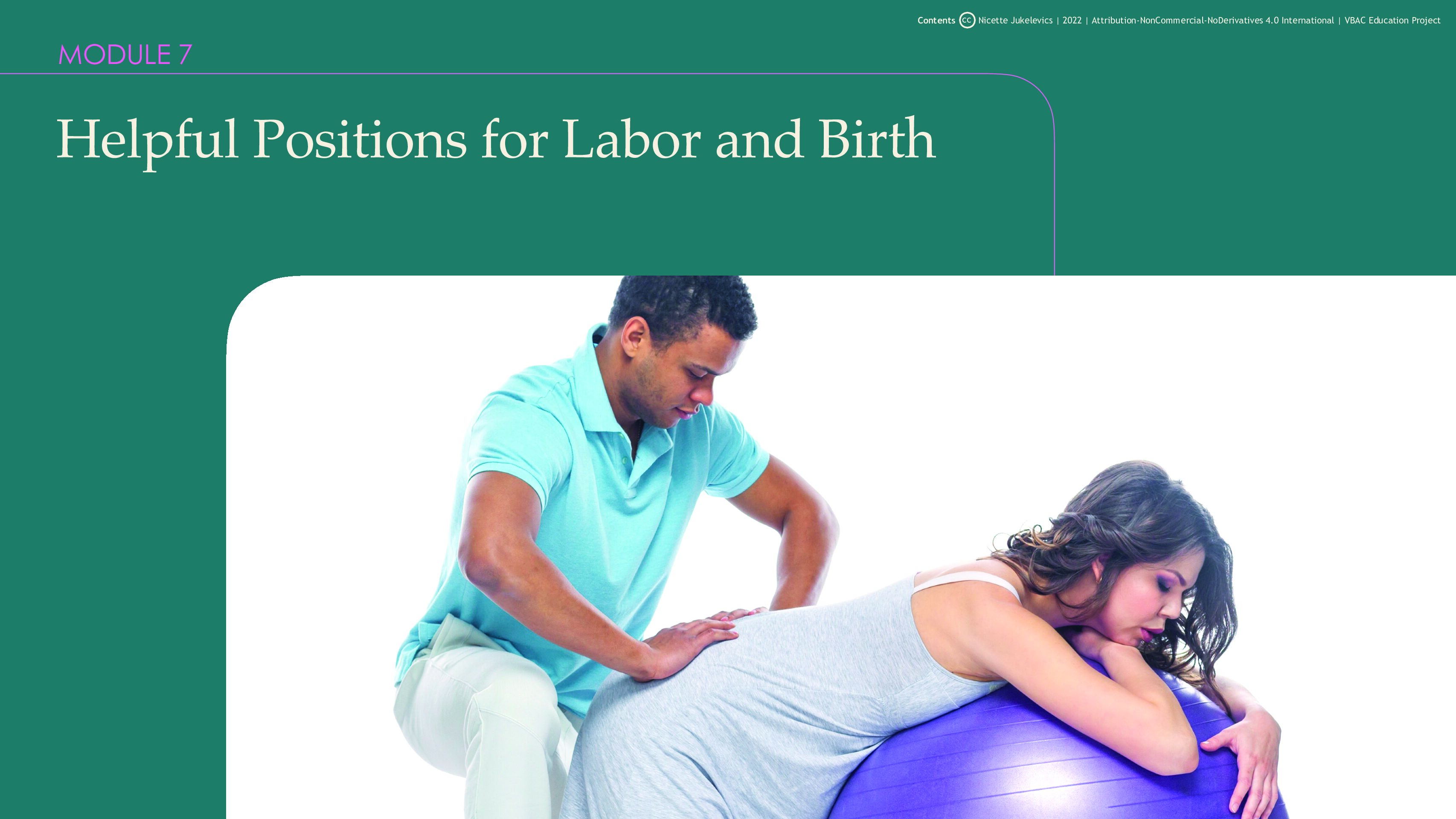
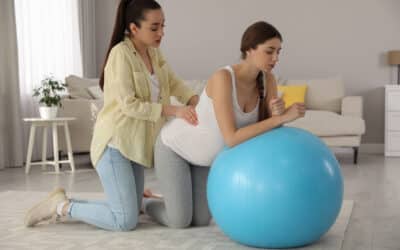
Being upright, moving, and using different positions during labor and birth can improve your chances of having a VBAC.
We have just published Helpful Positions for Labor and Birth, Module 7 of the educational slide set of the VBAC Education Project. This learning module includes many options for birth positions that can reduce pain, make your contractions more efficient, and shorten your labor. Download it as a pdf. It’s FREE.
Being Upright During Labor Helps Labor Progress
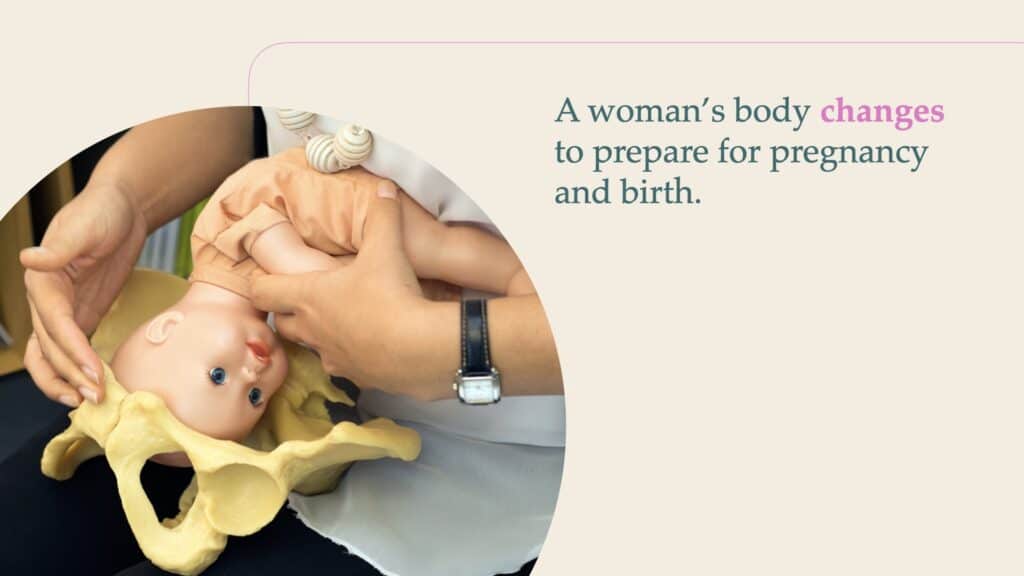
Your sacrum is a large, triangular bone at the base of the spine. Being upright widens the pelvic diameter and allows the tailbone to be flexible to accommodate better the size and movement of the baby’s body. It helps the baby rotate into a favorable position for birth.
Being upright rather than lying on your back during labor makes you less likely to experience hypotension. This position takes the weight of the uterus off the blood vessel that brings oxygen and nutrients to your baby making it less likely the baby will experience fetal heart rate problems. Pushing the baby out in an upright or side-lying position can reduce your risk of a cesarean.
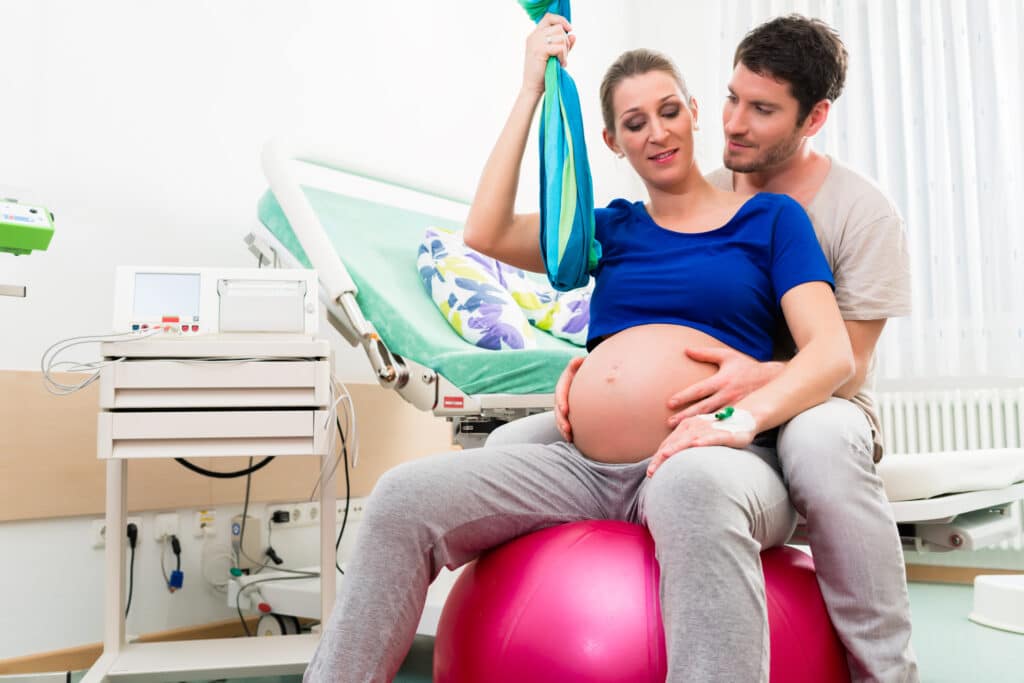
Moving, being upright, and using different positions during labor can help you feel more in control of your birth and more empowered to participate in the birth process. Download Module 7, Helpful Positions for Labor and Birth to be better prepared to labor for a VBAC.
References
American College of Obstetricians and Gynecologists. (2019). Committee opinion No. 766: Approaches to limit intervention during labor and birth. Obstetrics and Gynecology, 133(2), e164–e173. doi: 10.1097/AOG.0000000000003074
Simkin, et al. (2017). The labor progress handbook: Early interventions to prevent and treat labor dystocia (4th ed.). Wiley-Blackwell.
0 Comments