The VBAC Education Project
For Parents
If you had a baby by cesarean, you have a choice about how you want to give birth this time. It’s your decision. You have the right to choose how, where, and with whom you want to give birth. It is a human right.
Vaginal birth after cesarean (VBAC) is a safe alternative to a routine repeat cesarean and is recommended as an option by the world’s leading professional associations of obstetricians and gynecologists. Evidence tells us that about 70 to 75 percent of women who labor for a VBAC give birth safely yet many mothers in the United States who want to labor for a VBAC are not given a choice.
Routine repeat cesareans put healthy mothers and babies at risk for several short- and long-term health complications. Women and birthing families should have access to evidence-based information and safe care whether they choose to labor for a VBAC or have a repeat cesarean.

The VBAC Education Project (VEP) was designed to provide transparency, clarity, support, and guidance regarding birth options available to women and pregnant families who had a prior cesarean to empower decision-making that is right for them.
Whether you ultimately choose a hospital, birth center, home-based VBAC, or repeat cesarean, this toolkit will provide you with evidence-based information, helpful strategies, and resources that will enable you to make your own decisions about how to give birth.
VBAC- A Safe Alternative to Repeat Cesarean is a comprehensive educational program. It consists of an Introduction and 13 additional Modules presented as a slide set. Each Module covers a specific topic and provides information and guidance about how you can have a joyous and empowering birth. You can read all the modules or just the ones you think you need.

Each module includes the current evidence on each topic, strategies for a safe and empowering birth, questions to ask caregivers, a checklist for review, and interactive resources you can trust.
If you choose to labor after a prior cesarean, you will have access to the benefits and risks of planning a VBAC as compared to having a repeat cesarean, including how to improve your odds of having a vaginal birth and reduce your risk for a uterine rupture. You will learn about your options for pain relief and helpful positions for labor and birth. You will also learn how to create a safe and supportive birth environment and about the benefit of having a doula and/or a midwife on your birth team.
If you do have another cesarean, you will learn how to plan a “gentle” or “family-centered” cesarean that supports mother-infant bonding and breastfeeding. By creating an atmosphere and experience that is supportive and personally meaningful, you can have a positive and satisfying cesarean birth.
Here is the information that you will find in the slide set.
- Introduction. To Mothers and Birthing Families with a Prior Cesarean Birth: A Note from the Author
- Module 1. Maternity Care Is Changing
- Module 2. VBAC: The Benefits and Risks for Mothers and Babies
- Module 3. What Are the Odds of a Uterine Rupture While Laboring for a VBAC?
- Module 4. A Closer Look at Repeat Cesareans: Benefits and Risks
- Module 5. What Are My Chances of Having a VBAC?
- Module 6. The Four Main Reasons for a First Cesarean
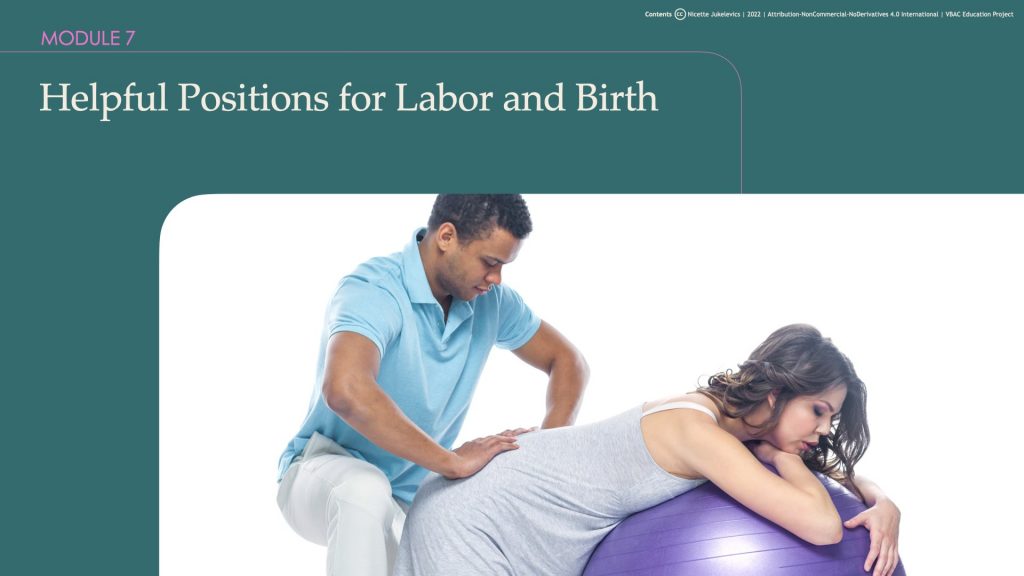
- Module 7. Helpful Positions for Labor and Birth
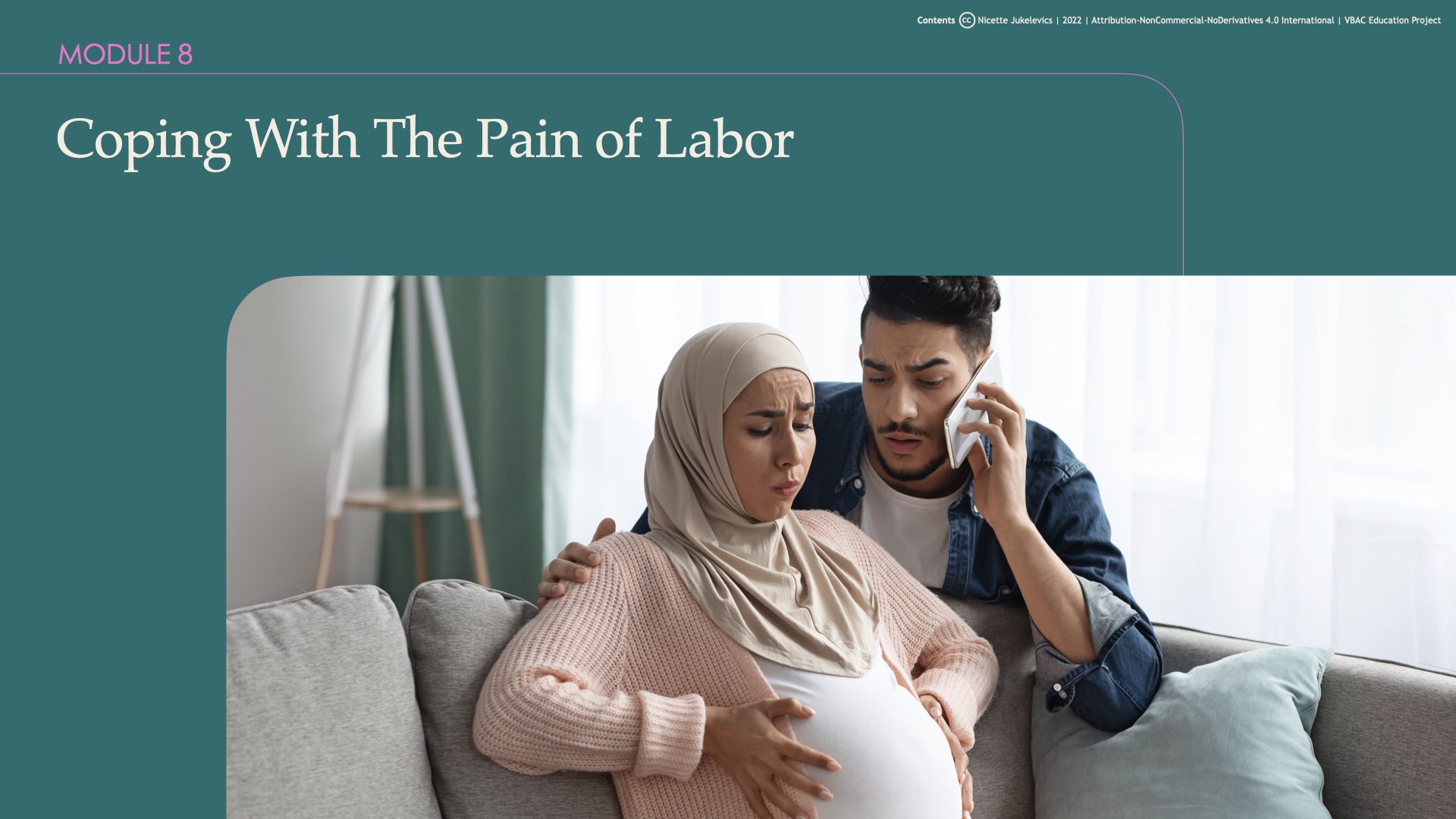
- Module 8. Coping with the Pain of Labor
- Module 9. A Cesarean Can Be Traumatic For Both Parents
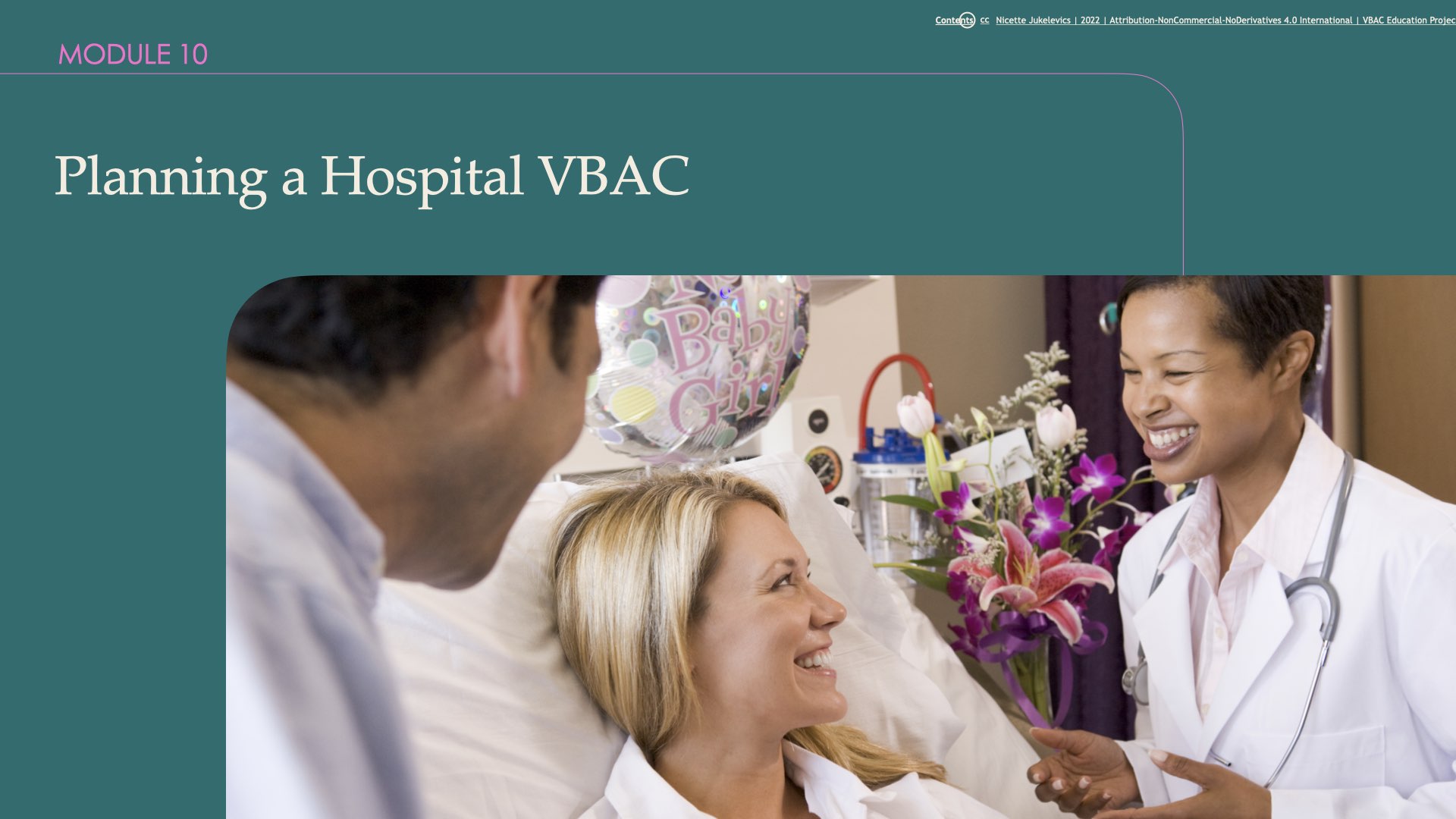
- Module 10. Planning a Hospital VBAC
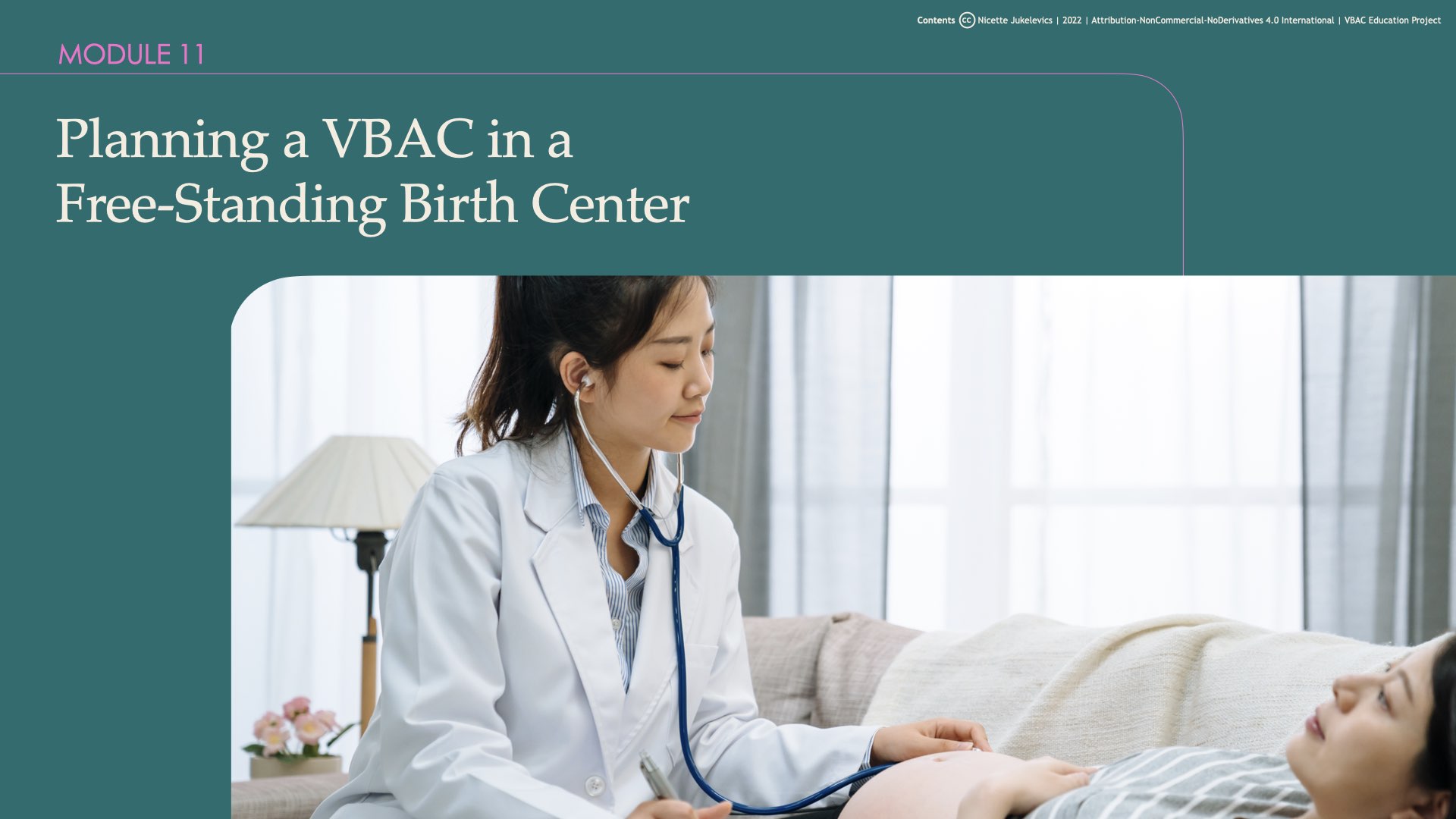
- Module 11. Planning a VBAC in a Free-Standing Birth Center
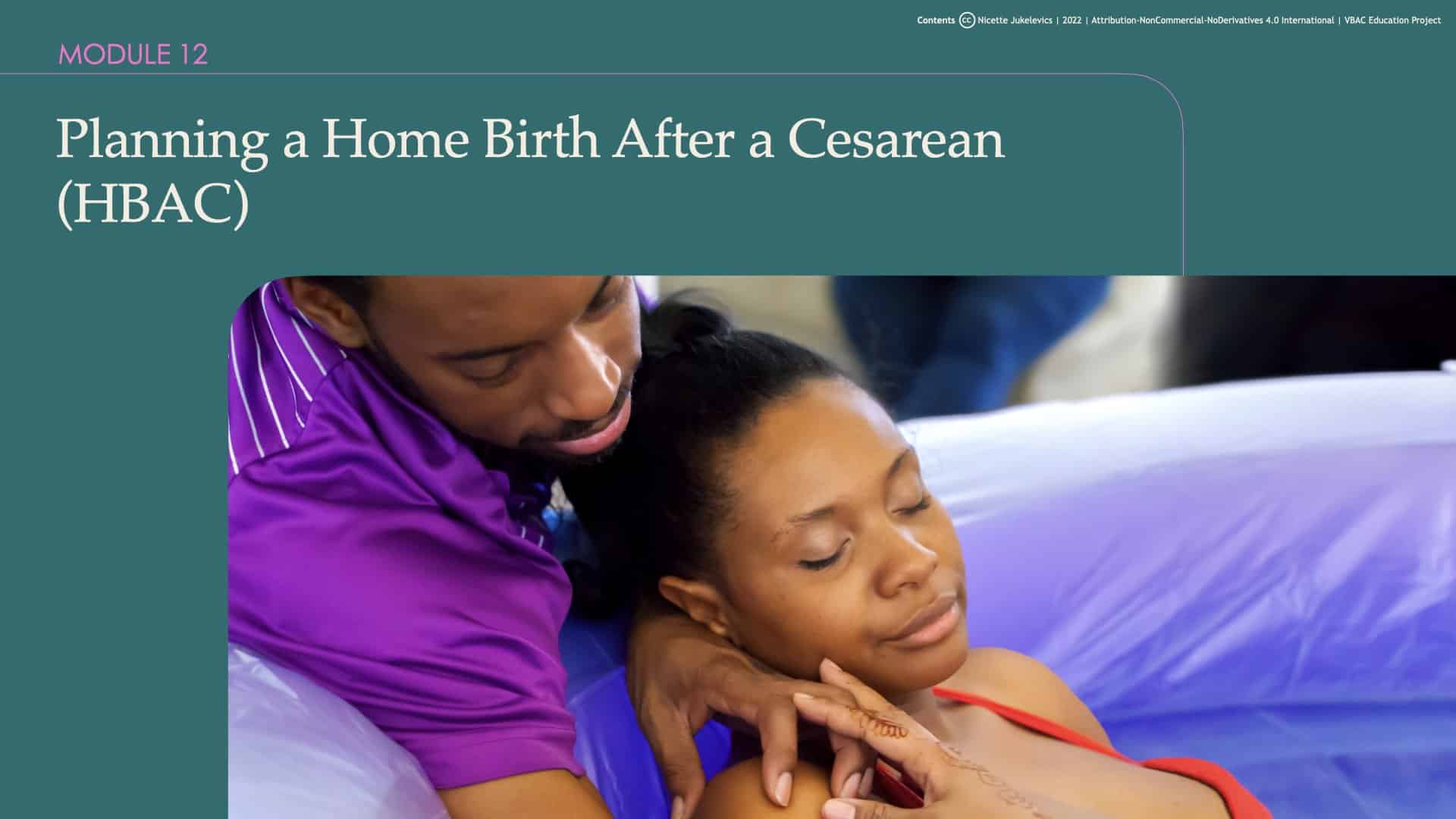
- Module 12. Planning a Home Birth After a Cesarean (HBAC)
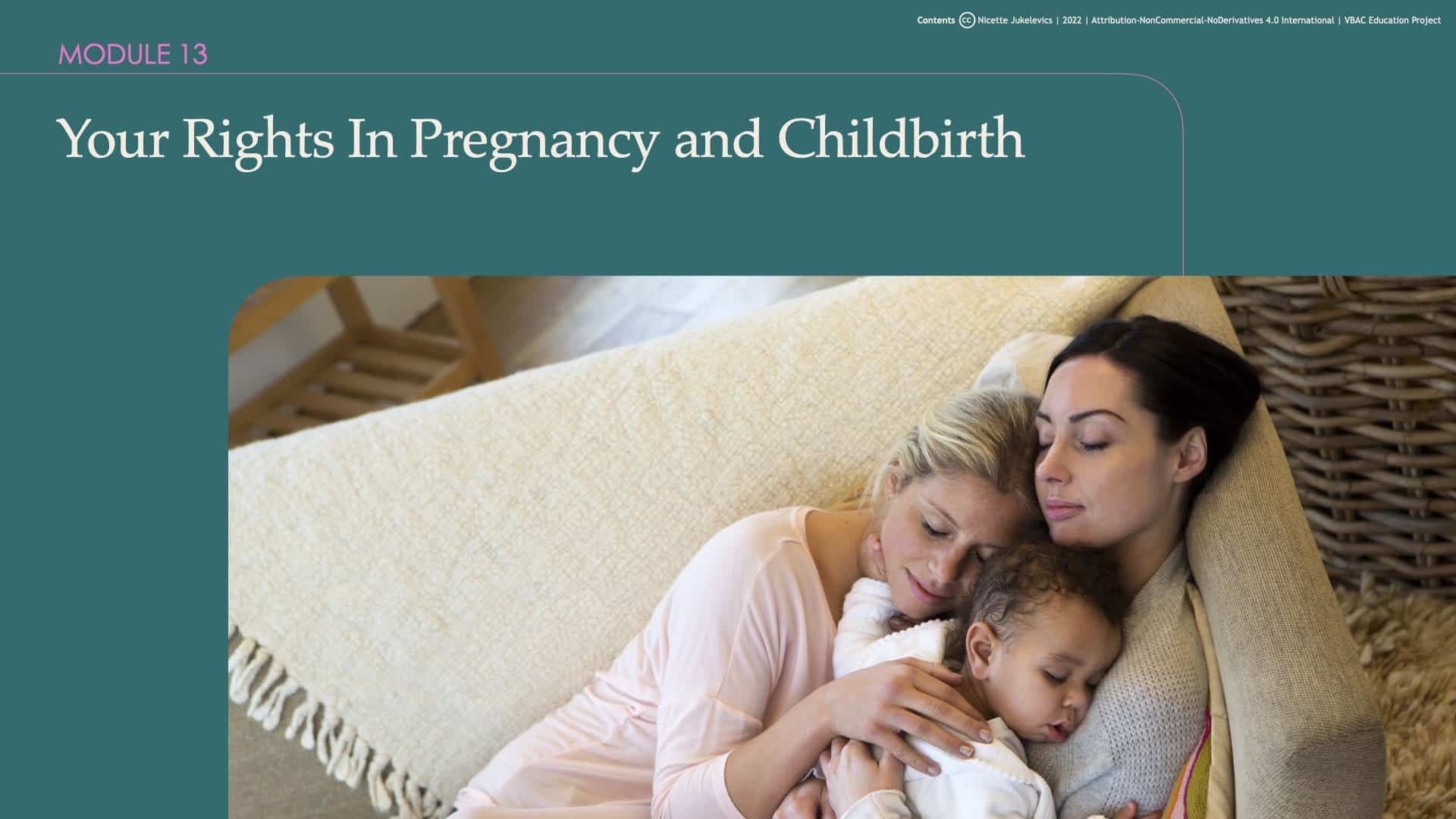
- Module 13. Your Rights in Pregnancy and Childbirth
Download all 14 Modules here.
Click through the slider to download the Modules individually.
We hope to add other educational components to the VBAC Education Project soon.

For Birth Advocates and
Maternity Care Professionals
The VEP was written for expectant parents, but the content can be used in many other ways. It can be used to teach a class or lead a discussion in a community support group, Clinicians, doulas, or childbirth educators can share it with clients.
The extensive research evidence can be used to create a webinar, continuing education unit, doula training, conference presentation, patient education brochures, fact sheets, or update maternity care professionals about best practices to support families who experienced a prior cesarean birth.
The VBAC Education Project
Is Available for Free
The VBAC Education Project is licensed by Creative Commons as Attribution-NonCommercial-NoDerivatives 4.0 International. This gives the user permission to download, copy, and distribute the information as it is provided—with attribution—for noncommercial purposes. Feel free to translate all or some locally-relevant modules into the language of your community.