Blog
California Reseachers Call For Fewer Cesareans and More VBACs
In a recently published White Paper by the California Maternal Quality Care Collaborative researchers in California confirmed that the high number of cesarean sections performed in the United States and in California put mothers and babies at increased risks and add significantly to healthcare costs with little evidence of health benefits. The report also confirmed that there are psychological costs that are often overlooked. Postpartum anxiety, depression, and post-traumatic stress disorder (PTSD). Cesareans affect maternal-infant attachment and breastfeeding as well. The cesarean rate in...
One More Reason to Support VBAC: Fewer Maternal Deaths
Cesarean section is major abdominal surgery can put mothers and babies at risk for several complications. Pulmonary embolism, a blockage in a lung artery, is one of the leading causes of maternal mortality. It is caused by a blood clot in the leg (deep vein thrombosis) that breaks free and travels through the blood stream to the lungs. Cesarean section is an independent risk factor for deep vein thrombosis. If given the option to labor for a VBAC, about 75 percent of women would give birth normally and avoid exposure to the risks of a surgical delivery. On August 22nd ACOG issued this...
New Study Reveals Non-Clinical Factors Have Significant Impact on VBAC
Although three out of four women who labor for a VBAC have safe normal births, routine repeat cesareans are still the norm in many countries. In the United States, women with a prior cesarean who want to plan a VBAC are at the mercy of the few providers and hospitals who will “allow” them to labor and reduce their own and their infants’ exposure to the adverse health outcomes associated with a surgical birth. The number of women who do give birth vaginally after a prior cesarean vary widely among providers, hospitals, states, and countries. To better understand the non-clinical factors that...
Labor Induction: Exposed
Although there is no evidence to show that non-medically indicated inductions improve outcomes for babies, inductions for non-medical reasons have been on the rise in the U.S. Increasingly, labors are being induced for psychosocial reasons and for medical convenience. What’s more, the majority of expectant mothers are not aware of the risks of elective induction when they request one or when their caregiver schedules it. We are learning, however, that with a healthy pregnancy, not waiting until labor starts on its own may have far greater health consequences for babies than we knew. Research...
Elective Inductions, Cesareans, and Preterm Birth
November is Prematurity Awareness Month when the March of Dimes (MoD) encourages care providers and the public to focus on the high number of preterm births in the United States and what can be done to reduce them. The March of Dimes, along with state and national health services are concerned that increasing elective inductions and scheduled cesareans may be contributing to the rising number of babies born preterm. Premature birth is the number one cause of newborn death in this country. In addition to encouraging women to stop smoking, avoiding multiples from fertility treatments and...
A Breech Version May Avoid A First Cesarean Or Lead To A VBAC
A breech is one of the main reasons why women have a cesarean. Yet it is also one of the most preventable. With a prior cesarean and a low-transverse uterine scar (bikini incision), an expectant mother with a breech who wants to have a VBAC can ask her care provider about the option of an external version. The current ACOG guidelines for VBAC state that an external cephalic version (ECV) is an option for low risk women with a low transverse uterine scar. If the ECV is successful women can labor for a VBAC rather than schedule a repeat cesarean. Towards the end of pregnancy, most babies...
What if it is a cesarean birth?
Although a cesarean is major surgery, it is also the birth of your baby. Find out what options are available if a cesarean section becomes necessary. This advance planning may make even an unexpected cesarean section a better experience. If you have a planned cesarean, ask to have the cesarean after labor begins to reduce the baby’s risk of being born too early and having breathing problems. Ask that your partner and/or labor assistant accompany you in the surgical suite. Ask to have a spinal or an epidural to allow you to be awake during the birth. This would allow you to hear your baby’s...
Bleeding and Threat of Miscarriage After a Prior Cesarean
I wonder how many U.S. women have heard their physicians say, "Let's schedule your cesarean, but I should tell you that compared to having a vaginal birth, if you become pregnant again, you will be at risk for placenta previa, placental abruption, and placenta accreta." I venture, not many. Each additional cesarean increases these risks. The number of scheduled non-medically necessary cesarean sections has been increasing in the U.S. for all women across the board. Regardless of age, race, type of insurance coverage, or socio-economic factors. This means that more and more women who become...
Understanding the Dangers of Cesarean Birth: Making Informed Decisions
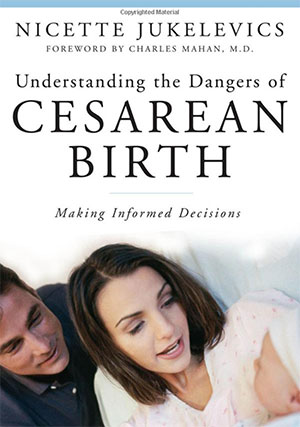
By: Nicette Jukelevics
Foreword by
Charles Mahan, M.D.
Critically examines the increasing use of cesarean deliveries for childbirth, the risks, outcomes, and other issues women need to consider to make an informed decision whether to have a natural birth or a cesarean.