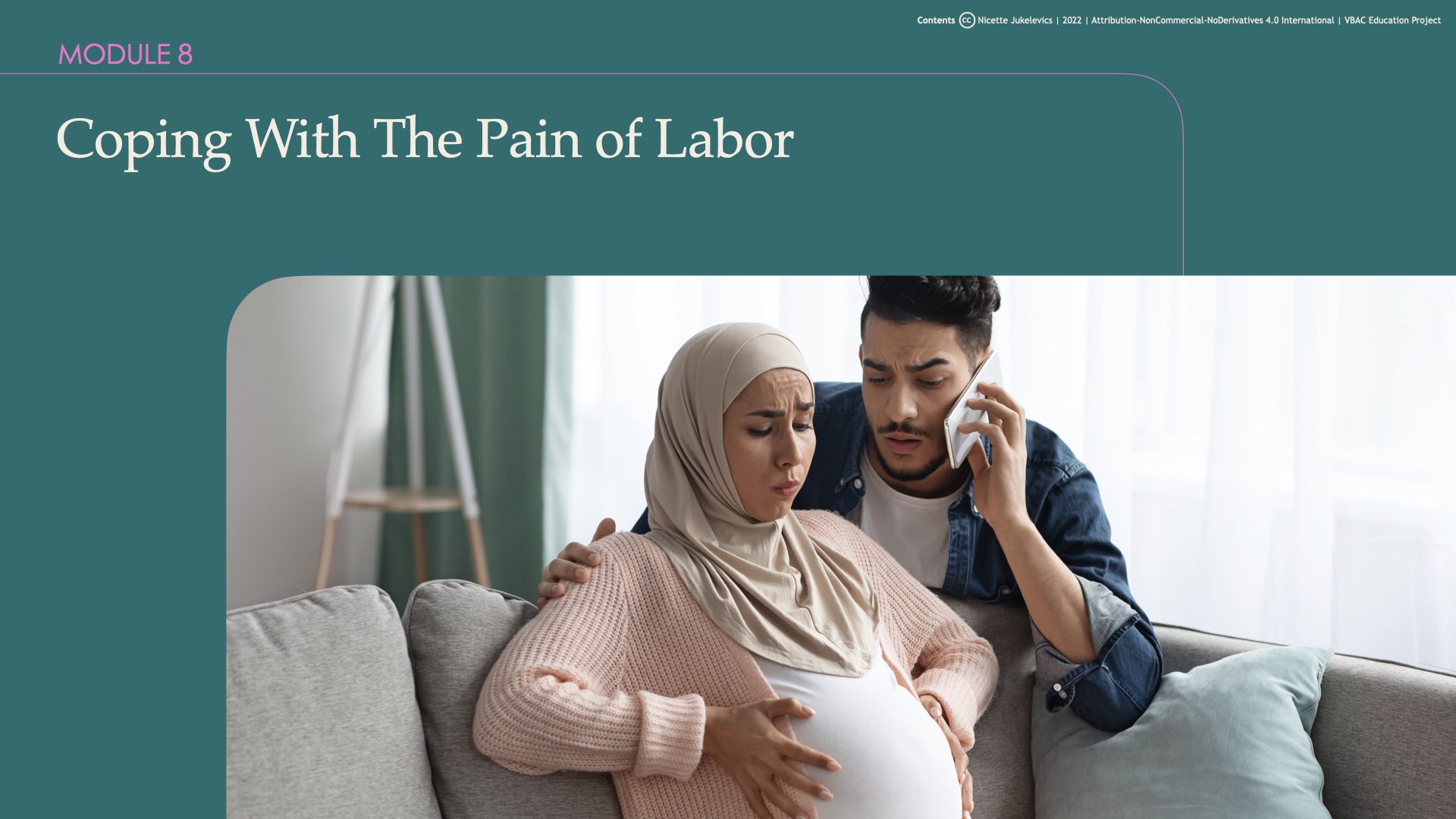
Announcement: Module 8 – Coping with the Pain of Labor is Now Available for Free Download!
We are excited to announce the publication of Module 8 – Coping with the Pain of Labor. If you are planning a VBAC, this module will help you to understand the many options available to you to ease the pain of labor. We encourage you to download Module 8 one of the fourteen learning Modules of VBAC: A Safe Alternative to a Repeat Cesarean available as a free PDF from our website.
Labor is a challenging journey that requires physical strength, confidence, and trust in the natural process of giving birth. The pain experienced during labor can be very demanding.
Module 8 includes various pain relief options for you to consider. We encourage you to explore these options and decide which ones may be helpful to you.
One valuable recommendation we make is to consider the assistance of a doula for your birth. A doula is a trained professional who offers continuous physical, emotional, and informational support to the mother. Their guidance and support to women and birthing people can greatly contribute to a positive birth experience.
Research shows that having a doula by your side increases the likelihood of having a spontaneous vaginal birth, reduces negative feelings about the birth experience, shortens labor, and decreases the need for interventions such as cesarean or instrumental vaginal birth, pain medication, epidurals, and Pitocin.
Module 8 also includes a range of complementary (non-drug) pain relief methods, including focused breathing and relaxation techniques, massage, acupuncture, aromatherapy, audio analgesia (music), yoga, and hypnosis. These non-drug methods can provide effective pain relief and boost your confidence during labor.
Comfort measures, such as warm packs, ice packs, cool compresses, and counter pressure for back pain, are also discussed. Additionally, we explore the benefits and risks of water immersion during labor, sterile water injections for back pain, transcutaneous electrical nerve stimulation (TENS), nitrous oxide, and the use of intramuscular and IV opioids.
It is important to note that each method has its advantages and disadvantages. This information can help you make an informed decision based on your unique needs and preferences.

Epidural analgesia is a type of pain management used during labor that involves administering medication into the epidural space in the lower back. While epidural analgesia is a safe and effective method for pain relief for many women, there are some potential risks to consider. Some of these risks include lower blood pressure, prolonged labor, and increased likelihood of cesarean delivery.
Every birth experience is unique, and it is vital that you make choices that meet your preferences and needs. We hope that Module 8 will provide valuable insights and support as you prepare for your upcoming birth.



0 Comments