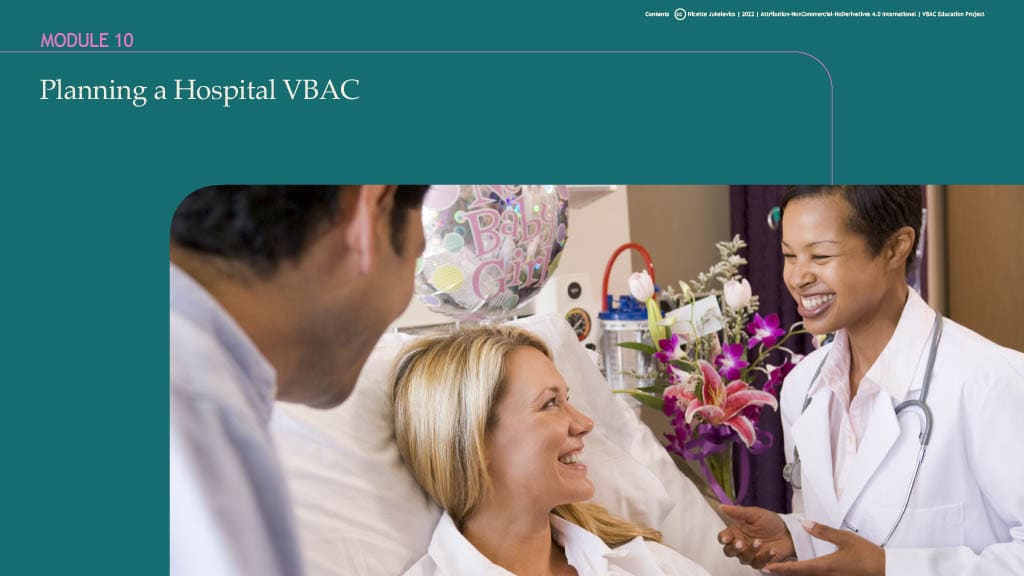
We are excited to announce that Module 10, Planning a Hospital VBAC, is now available for FREE as a PDF download. This module, part of the VBAC Education Project, provides valuable information and insights for expectant families considering vaginal birth after a cesarean in a hospital setting. We understand the importance of making informed decisions about your pregnancy and birth. This module provides evidence-based information to increase your odds for a vaginal birth.
In the United States, expectant families have the right to choose where and with whom they want to give birth. Whether it’s in a hospital, birth center, or at home, each birth setting carries its own risks and benefits. Module 10 focuses specifically on planning a hospital VBAC and addresses key issues that can influence your birthing experience.
One of the significant barriers many families face when accessing care and support for a VBAC is the varying attitudes and commitment of healthcare providers. While many care providers respect informed choice and provide encouraging support for VBAC, others may hold biases or express non-evidence-based concerns about the risks associated with VBAC. It is important to find a supportive maternity care team that views labor and birth as a normal process and respects your wishes.
Choosing the right hospital for your VBAC can significantly impact your chances of having a successful vaginal birth. Hospitals and care providers differ widely in their commitment to supporting VBACs, as evidenced by variations in VBAC rates among different facilities. Module 10 will help you to learn about your options and find a hospital with a care team that encourages and supports vaginal birth.
Planning a hospital VBAC comes with advantages and disadvantages. On the positive side, hospital births are often covered by insurance plans and provide access to an epidural, continuous fetal monitoring, and specialized care for you and your baby in case of complications. However, hospital births also tend to have higher rates of interventions and lower VBAC rates compared to other birth settings.
We encourage you to ask about cesarean and VBAC rates, intervention rates, support for non-drug pain relief methods, and emergency response protocols.
Having open and informed discussions with your care providers can help ensure you receive the support you need for a safe and empowering birth.
We hope that Module 10 and the accompanying resources will empower you to make informed decisions about your hospital VBAC. Remember, you have the right to choose the birth experience that feels right for you and your baby. We wish you a safe and fulfilling birthing experience!



0 Comments